Contents
- Electronics I Project
- Electronics II Project
- Electromagnetic Project
- Probability Project
- Communication System Fundamentals Project
- Optical Communication Project
- Power System Project
- Analogue Control Systems Project
- Mechatronics Project
1️⃣ Electronics I Project
Integrated Control System for Four-Channel Relays Using Arduino Microcontroller
The control of electrical devices and circuits using relays is a fundamental aspect of automation and control systems. Relays act as switches that enable the control of high-power electrical loads with low-power control signals. In recent years, the integration of Arduino microcontrollers with relays has revolutionized the field of home and industrial automation, providing a flexible and cost-effective solution for controlling various electrical devices. This project focuses on the development of a system that allows the control of four-channel relays using an Arduino microcontroller powered by 220 AC. The Arduino microcontroller acts as the central hub for controlling the relays and responding to user inputs or external signals. Safety and efficiency are key considerations throughout the design.
You can check the report here.
2️⃣ Electronics II Project
Design and Implementation of an Obstacle-Navigating Robot with Autonomous Parking Capabilities
The field of robotics has made significant strides in recent years, with autonomous robots being applied in industrial automation, transportation, and safety systems. This project explores the design and implementation of an autonomous robot integrated with a light flash sensor. The robot tracks a line on a surface while responding to obstacles using IR sensors and logic gates. Op-Amp circuits ensure precise movement control. This project demonstrates practical applications of sensors and basic electronics from the Electronics II course, showcasing how a simple robotic system can navigate real-world environments safely and efficiently.
You can check the report here.
3️⃣ Electromagnetic Project
WIRELESS POWER TRANSFER (WPT)
Wireless power transfer (WPT) enables powering devices without a physical connection. Traditional wired methods face limitations in flexibility and durability. This project investigates WPT methods including inductive coupling, resonant inductive coupling, and microwave power transfer. A prototype system is designed to demonstrate efficient energy transfer over a distance while maintaining safety. The study evaluates performance metrics and proposes optimizations, aiming to provide safe, efficient, and practical wireless energy transfer solutions.
You can check the report here.
4️⃣ Probability Project
Analysis and Visualization of Random Variables in a Solar Panel Farm
This project focuses on understanding and analyzing the behavior of random variables in electrical systems, particularly within a solar panel farm. Statistical modeling and probability analysis are applied to predict performance, detect anomalies, and optimize energy output. Visualization techniques help to interpret data and make informed engineering decisions.
You can check the report here.
5️⃣ Communication System Fundamentals Project
FM Transmitter
Frequency Modulation (FM) transmitters are foundational to modern wireless communication, enabling high-fidelity audio broadcasting and reliable data transmission. Developed by Edwin H. Armstrong in 1933, FM modulates information by varying the frequency of a carrier wave, offering superior noise immunity compared to Amplitude Modulation (AM). FM is widely used in commercial radio, aviation communications, and emergency services due to its robustness in noisy environments.
You can check the report here.
6️⃣ Optical Communication Project
400 GB Optical Communication System
The project covers high-speed optical communication systems capable of transmitting large amounts of data efficiently over long distances. Techniques include coherent detection, advanced modulation, wavelength-division multiplexing (WDM), and digital signal processing (DSP). Challenges like fiber nonlinearity, high power usage, and cost-effectiveness are addressed, providing a foundation for scalable and reliable communication networks.
You can check the report here.
7️⃣ Power System Project
Design of a Solar PV System with Battery Storage Based on Annual Energy Consumption of Residential House
This project studies household energy consumption and designs a tailored solar photovoltaic (PV) system with appropriate battery storage. Goals include precise load analysis, selecting inverters and charge controllers, designing system topology, and evaluating financial and technical feasibility. The final output is a comprehensive report detailing calculations, diagrams, and analysis for efficient and reliable energy management.
You can check the report here.
8️⃣ Analogue Control Systems Project
Stability
This project investigates the stability of a given linear, time-invariant (LTI) control system using a comprehensive set of classical control theory techniques.
You can check the report here.
9️⃣ Mechatronics Project
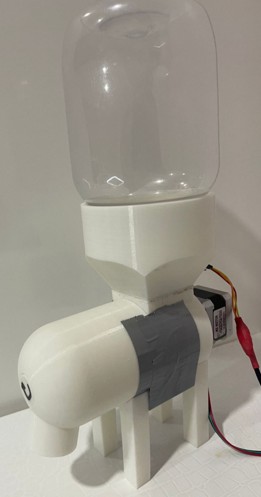
Pet Feeder System Using PIC16F877A
This project presents the design of a smart pet feeder that automatically feeds pets based on preset feeding times.
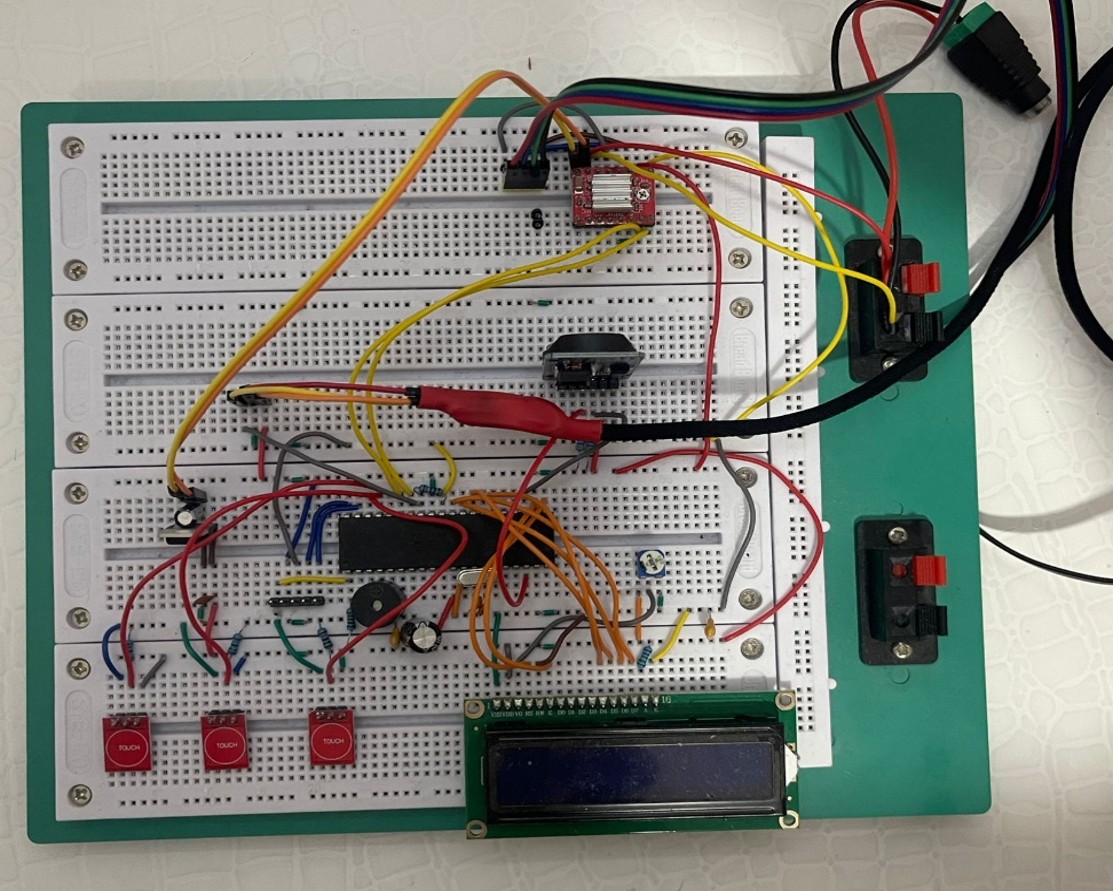
The system uses a PIC16F877A microcontroller and a DS3231 real-time clock (RTC) to manage the feeding schedule.
The system controls a stepper motor via an A4988 driver to move a hopper that dispenses food at the set times.
An infrared (IR) sensor checks the food level in the food container, and if the food container is empty, the system displays a warning on the LCD and activates a buzzer.
The system has a user-friendly interface with buttons to set feeding times and control the motor manually. It also uses EEPROM to store settings, ensuring the data is saved even if the power goes out.
This project combines automation, sensing, and user control in a practical and easy-to-use pet care solution.
You can check the report here.
You can check the Code & Circuit digram here.